Businesses with siloed software
Companies whose website, CRM, accounts and inventory each hold separate, conflicting data.
Connect your platforms so data flows automatically. Upscaleads delivers API Integrations for businesses in Dubai and across the UAE.
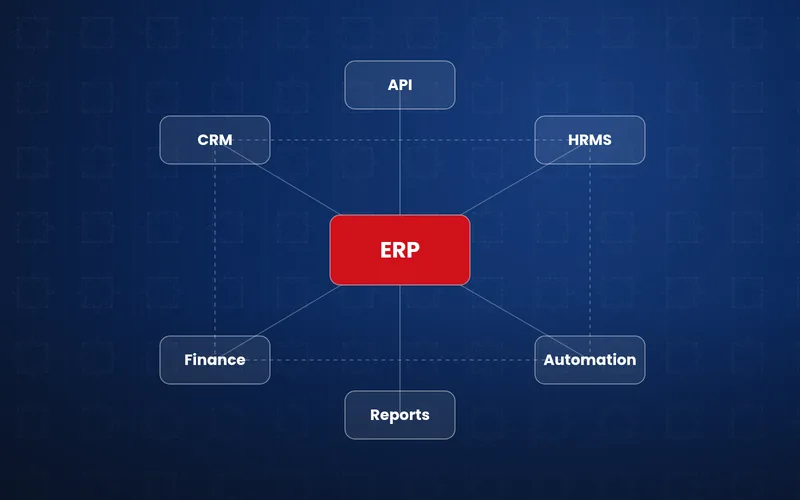
API integration services connect separate software systems so they exchange data automatically. Common examples are sending website leads to a CRM, syncing online orders with an ERP or accounting system, taking payments through a gateway and triggering WhatsApp messages. The work includes mapping data, building connectors, custom APIs or webhooks, testing and monitoring. Upscaleads provides these services in Dubai.
Disconnected systems create duplicate work and errors. We connect your websites, CRMs, ERPs, payment gateways and marketing tools so data moves automatically and reliably.
Where no ready-made connector exists, we develop custom APIs and webhooks.
Every integration is documented and monitored.
Companies whose website, CRM, accounts and inventory each hold separate, conflicting data.
Businesses needing payments, delivery, inventory and notifications to work together reliably.
Teams that want WhatsApp conversations and leads recorded automatically in their CRM.
Platforms that need a secure, documented API so partners and customers can connect to them.
5 deliverables, scoped to your goals.
A structured process, with clear communication at every stage.
Document how work flows today, where time is lost and what data matters.
Define modules, user roles, integrations and a phased roadmap.
Develop in short cycles with regular demos and feedback.
Move and clean existing data from spreadsheets or legacy tools.
Train your team and support adoption during launch.
Maintenance, improvements and new modules as you grow.
Our team builds websites, CRMs and ERPs, so we know how data should look in each system being connected.
We use existing connectors where they are reliable and build custom APIs or webhooks where they are not.
Integrations can pass lead source and campaign data, so you can see which marketing activity drives revenue.
Each integration is documented and monitored, so errors are spotted and fixed quickly.
An API integration lets two software systems exchange data automatically, for example sending website orders to accounting software or leads to a CRM.
Yes. We integrate payment gateways with websites, apps and business systems.
Webhooks let one system notify another instantly when something happens, such as a new order or form submission, triggering automated actions.
Yes. We develop secure, documented custom APIs so your systems can connect with partners and other software.
Cost depends on the number of systems being connected, whether they offer well-documented APIs, the volume and complexity of data, custom logic or transformation required, security needs and ongoing monitoring. Using an existing connector is usually simpler than building a custom API. We provide a tailored quote after a consultation and technical review.
Often, yes. If both systems offer an API or webhooks, we can build a custom connection between them. Where a system has no API, options may include file-based exchanges or middleware. We review the documentation for each system during planning and explain what is technically possible before development begins.
You typically need a Meta Business account, a phone number dedicated to the API, and access either directly through Meta or via a WhatsApp Business solution provider. Business verification may be needed for higher messaging limits, and messages you start outside an active conversation window must use pre-approved templates. We guide you through setup, then connect WhatsApp to your website, CRM or other systems.
Yes. We can sync your e-commerce platform or POS with your accounting or ERP system so orders, customers, payments, stock levels and invoices flow automatically. This removes manual data entry, keeps inventory accurate across online and in-store sales, and speeds up month-end reconciliation. We also handle refunds, discounts and VAT so the figures match in both systems.
Yes. We connect tools such as Google Ads, Google Analytics, Meta ads, email marketing platforms and landing page builders with your website and CRM. Leads arrive with their campaign source, customer lists stay in sync for targeting, and conversion data can be sent back to ad platforms. This gives you clearer reporting on which campaigns produce real business.
We follow established security practices for every integration. Connections use encrypted HTTPS, credentials and API keys are stored securely rather than in code, and each integration is given only the permissions it needs. Where supported, we use token-based authentication such as OAuth, verify incoming webhooks and log activity. Sensitive card details are handled by the payment gateway, not stored in your systems.
Third-party APIs do change, so we build integrations to cope. They include error handling, retries and queues, so data is not lost during an outage and is processed once the service returns. Alerts notify us or your team of failures. Under a maintenance plan, we track announced API changes and update your integrations before older versions stop working.
It depends on the systems involved. Connecting two platforms with well-documented APIs can be relatively quick, while integrations involving older software, complex data mapping or several systems take longer. Access to test accounts and documentation from each provider also affects timing. After reviewing your systems, we give you a clear timeline covering development, testing and go-live.
Yes, where the systems allow it. Real-time sync uses webhooks or event-based triggers, so updates such as a new order or payment appear in the other system within moments. Where real-time is not possible or not needed, we schedule regular syncs, for example every few minutes or overnight. We recommend the approach that best balances speed, reliability and cost for your business.
Yes. We document each integration, including which systems are connected, what data moves between them and how often, the error-handling rules and where credentials are managed. For custom APIs, we also provide endpoint documentation for developers. You own the code and documentation, so your team or another developer can maintain and extend the integrations in future.
Practical articles from our team on this topic.
A jargon-free explanation of APIs and integrations: how they connect your business systems, common UAE use cases, what drives cost and how to plan a project safely.
Four ways to send website form enquiries straight into your CRM, plus the fields, tracking data, consent and testing steps that make the integration reliable.
What to compare when choosing a UAE payment gateway: supported payment methods, onboarding requirements, fee structures, settlement times and platform integration.
Book a consultation to review the systems you use and plan integrations that keep your data in sync.